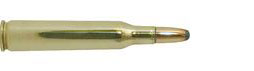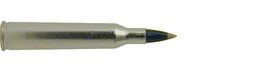
The 280 Remington is based on the 30-06 case necked down to accept 7mm bullets with the shoulder moved forward to prevent chambering in other 30-06 case based cartridges. Remington introduced the 280 Remington in 1957 in their model 740 semi-auto rifle and one year later it was chambered in the Model 725 bolt-action.
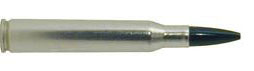
- Ballistic Coefficient: 0.485
- Product Symbol: SBST280
- Description: Rapid, controlled expansion. Penetrates thin skin, light muscle and bone. For antelope, deer, black bear.
Rifle Ballistics
| Distance (yds) | Muzzle | 50 | 100 | 200 | 300 | 400 | 500 |
| Velocity (fps) | 3040 | – | 2842 | 2653 | 2471 | 2297 | 2130 |
| Distance (yds) | Muzzle | 50 | 100 | 200 | 300 | 400 | 500 |
| Energy (ft. lbs.) | 2872 | – | 2511 | 2187 | 1898 | 1640 | 1410 |
| Distance (yds) | 50 | 100 | 150 | 200 | 250 | 300 | |
| Short Trajectory (in.) | -0.2 | 0.0 | -0.8 | -2.8 | -6.0 | -10.5 | |
| Distance (yds) | 100 | 150 | 200 | 250 | 300 | 400 | 500 |
| Long Trajectory (in.) | +1.4 | +1.3 | 0.0 | -2.5 | -6.3 | -18.4 | -37.0 |
140 gr. Supreme® Ballistic Silvertip™
Around 1980 Remington changed the name to the 7mm Express in hopes of increasing the popularity of this fine round. This only caused confusion and didn’t help its popularity so the name was changed back to 280 Remington. Around 1985-86 Remington introduced the “Mountain Rifle” a slim and trim version of the model 700 and included the 280 as one of the initial chamberings along with the 270 Winchester and the 30-06 Springfield. This was a real shot in the arm for the 280 Remington. Finally the company that had introduced the round had chambered it in a modern bolt-action hunting rifle. Since then Remington has introduced the round in several other model 700 configurations, including the BDL, BDL SS, and the Classic in 1997. Other manufactures such as Ruger, Winchester, and more offer the 280 Remington and it seems it is more popular now than ever. In my opinion the 280 Remington has all the advantages of the 270 Winchester and the 30-06 Springfield, incorporating the flat trajectory of the 270 with the power of the 30-06. Being 7mm not only gives the 280 Remington more bullet choices than the 25-06 Remington or the 270 Winchester, but greater range in weights of bullets plus a larger frontal diameter. Which lends to better performance on game larger and heavier than the White-tailed deer. It is also kinder to the shoulder than the 30-06 or 7mm Remington Magnum when fired in a comparable weight rifle. The 280’s real world performance is equal to that of the 7mm Remington Magnum (with 140 to 150-grain bullets). When both cartridges are loaded to maximum, with Reloader 19 powder and using a 140-grain Nosler Ballistic Tip, the 280 is only 150 fps behind the 7mm Remington Magnum, also the 7mm Magnum is only 1.5” flatter in trajectory at 300 yards (based on a 100 yard zero). The 280 Remington holds pace with the magnum and does it with 9-grains less powder and, as mentioned earlier, less recoil and muzzle blast. The first high-powered rifle I ever owned was a 280 Remington in a model 700 “Mountain Rifle” topped with a 6x42mm Leupold scope. This sleek little rifle/scope combo when loaded and sling attached tipped the scales at just over 7 ¼ pounds. This type rifle is ideal for hunting situations where country is rough and covering a lot of ground is the name of the game. Recoil, however is brutal. When chambered in a “full-size” rifle, weighing around 9 pounds with scope, recoil becomes manageable. I believe the 280 Remington is at its best when loaded with bullets weighing between 140 and 165 grains. Federal loads a 150-grain Nosler Partition; this is an outstanding factory load for the 280 Remington. My favorite hand loads consisted of a 140-grain Nosler Ballistic Tip and a 162-grain boat-tailed soft point from Hornady. A maximum charge of IMR 4831 under the 140-grain Ballistic Tip produced the best accuracy. While the Hornady bullet liked a case full of Reloader 19 for its work. The 280 Remington as plenty of power to any North American game when properly loaded, but is most a home with the White-tailed deer and similar game.
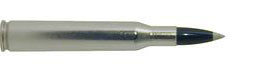
 There are more factory offerings for the 270 than the 25-06 and they may be a little easier to find. Both shoot extremely flat and have cleanly taken countless heads of game to earn the reputations they hold as hunting rounds. Now I’ve always heard if don’t have anything good to say about something you shouldn’t say anything at all. Good advice to follow when you are discussing things other that hunting rounds. Personally I’ve never been a big fan of either one of these cartridges. For one simple reason: the bullets. I prefer heavier weight bullets and a larger fontal diameter than what is available for the two calibers. As for the 270 (.277) weights commonly range from 100 to 150 grains, in the 25-06 (.257) from 70 (+/-) to 100 grains for varmints and 100 to 120 grains, for deer size game. A somewhat limited selection when compared to the 7mm and 30 calibers. Secondly, the 25 (.257) and 270 (.277) bullets have smaller frontal diameters than the 7mm (.284) and the 30 cal. (.308). One could argue that this is splitting hairs. After all we are talking about thousandths of and inch, and I would have to agree. However, once the bullet has mushroomed, then the 7mm and the 30 generally have a considerably larger frontal diameter than the 25 or the 270 caliber bullets. Resulting in larger wound channels and exit holes. All that being said both are superb performers on White-tailed deer, Antelope, and similar game. Almost everyone I hunt with uses one of these two rounds for their hunting. I’ve never owned either one but I have hand loaded for and shot quite a few rifles chambered for each cartridge. My good friend and hunting partner “Wild Bill” Pirkle has been using a Remington 700 chambered in 270 Winchester for years. I’ve seen him take everything from Cottontail rabbits up to wild boars weighing well over 300 pounds. It’s hard to argue with that type of accuracy and performance! He uses Winchester’s “Supreme” factory ammo with a 130-grain Ballistic Silver Tip. Anyone looking for good factory load for a 270 Win this is defiantly one to try. The 130-grain seems to be the best weight bullet for accuracy, trajectory, and all around performance on game in the 270 Winchester. I guess when what bullets are offered work; you do not need a large selection to choose from. As for the 25-06 Remington guys, everyone I know seems to be shooting a different load ranging from a 100-grain up to 120-grain bullets. Some of these guys shoot factory and some are hand loading to get the results they want. Travis (good friend and fellow hunter and shooter) hand loads a 100-grain Nosler Ballistic Tip in his 25-06 and says it is an excellent performer on deer and hogs but cautions bullet placement on mature wild boars and large game with this bullet. Federal loads a 117-grain Sierra Boat-tail in their Premium line of ammo for the 25-06 and it seems to be a good one. I’ve sighted in a couple of 25-06’s for people using this load and it’s quite accurate. Recoil falls into the moderate range for both of these cartridges, and I have found the 25-06 Remington and the 270 Winchester to be much more comfortable to shoot than the 280 Remington or the 30-06 Springfield in the same weight rifle. In lightweight rifles such as the Winchester Featherweight or Remington Mountain Rifle the 270 is far more tolerable than the 280 or 30-06. If I had to choose between the two I would probably choose the 25-06 for my personal battery, although the 270 is would most likely be the better all around cartridge.